
In Malaysia’s rapidly modernizing manufacturing sector, companies are constantly seeking ways to increase productivity, improve product quality, and reduce operating costs. As demand grows across industries, from electronics and automotive to food processing and consumer goods, automation is no longer a luxury but a necessity. Automation machines are at the forefront of this transformation, helping Malaysian manufacturers streamline their production processes and stay competitive in a global marketplace.
From inspection and assembly to specialized tasks like screwing and glueing, automation machines reduce manual labor, eliminate repetitive tasks, and ensure consistent output. In this article, we explore how these technologies are reshaping manufacturing efficiency in Malaysia and highlight some common automation solutions available today.
What Are Automation Machines and Why They Matter
At their core, automation machines are systems designed to perform specific production tasks automatically, often with greater precision, speed, and consistency than human operators. In manufacturing, automation machines handle activities that are repetitive, time-consuming, or require exacting tolerances. By adopting automation, companies can free workers from mundane tasks, reduce errors, and allocate human expertise to more strategic roles.
The benefits include:
- Increased productivity through continuous operation
- Improved product quality with fewer defects
- Lower labor costs by reducing manual steps
- Greater throughput and scalability as production grows
These advantages help Malaysian manufacturers meet stringent quality standards, maintain price competitiveness, and accelerate delivery timelines for increasingly demanding customers.
Key Automation Machines Driving Efficiency in Malaysia
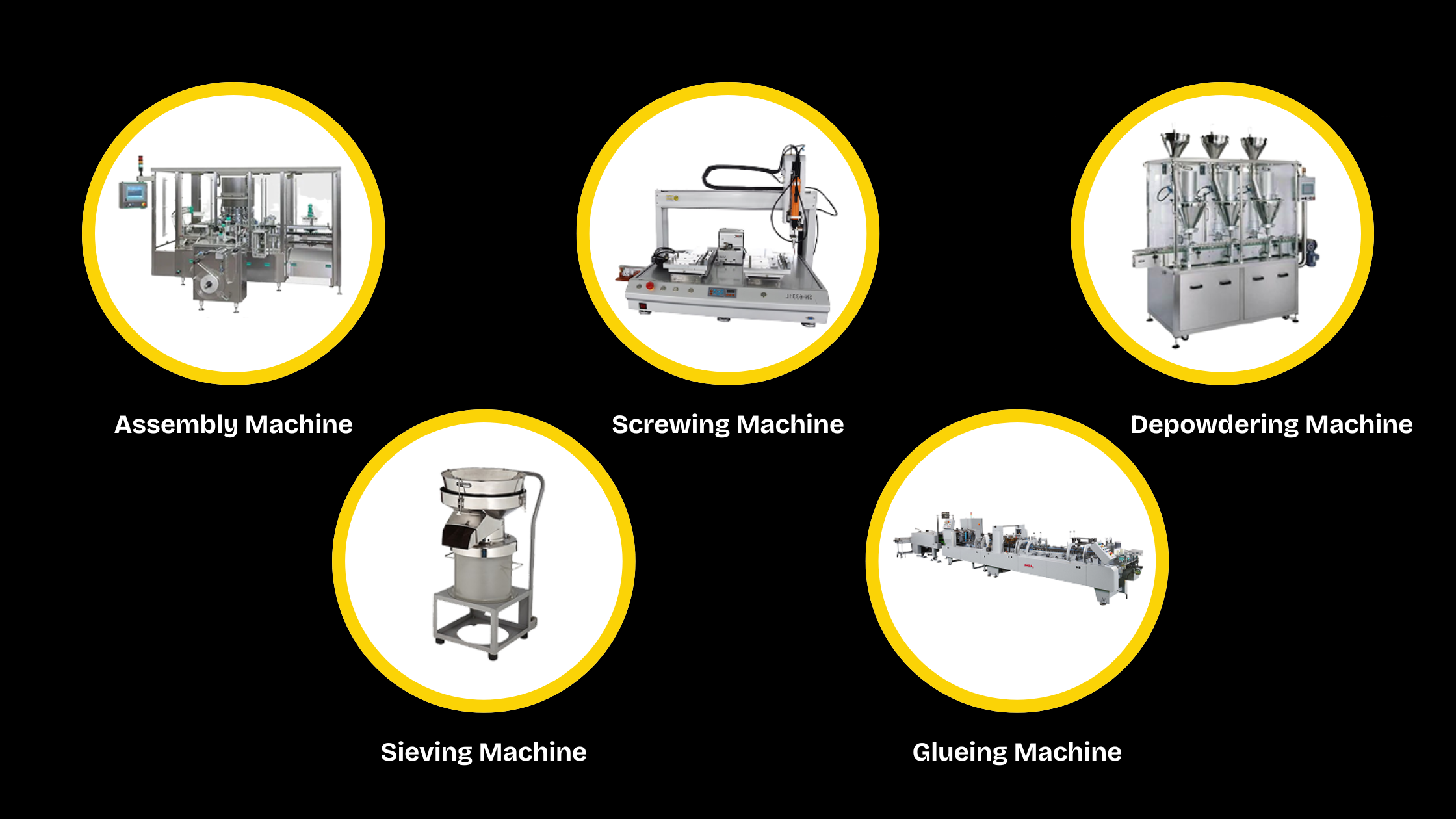
CAD Work Engineering specialises in custom machine automation solutions tailored to Malaysian manufacturing needs. Their range of products automates various stages of production, each focused on improving throughput and consistency.
Assembly Machines
Assembly machines automate the process of assembling components into finished products or sub-assemblies. These machines are designed to handle repetitive assembly tasks with consistent accuracy, reducing reliance on manual labour and improving repeatability across production runs.
Automated assembly machines are commonly used in environments that require:
- Consistent assembly quality across large batches
- Accurate positioning and alignment of components
- Stable and repeatable production processes
By standardising assembly steps, these machines help manufacturers maintain uniform build quality and reduce variations between units.
Screwing Machines
Screwing machines automate fastening operations by applying screws with controlled positioning and torque. This ensures fastening consistency and reduces the risk of under or over-tightening, which can affect product quality.
Screwing automation is particularly useful for:
- Repetitive fastening tasks
- Applications requiring consistent torque control
- Improving operator safety and efficiency
These machines are widely integrated into assembly lines where fastening accuracy and repeatability are critical.
Depowdering Machines
Depowdering machines are used to remove excess powder from parts, particularly in powder-based manufacturing processes such as metal additive manufacturing. Automating depowdering helps reduce manual handling while ensuring parts are properly cleaned before downstream processes.
Key advantages include:
- Efficient removal of residual powder
- Improved consistency in part finishing
- Reduced manual cleaning effort
Automated depowdering supports cleaner workflows and more controlled material handling.
Sieving Machines
Sieving machines separate materials based on particle size using mesh screens and controlled vibration. These machines are commonly used to classify powders or granules, ensuring material consistency before further processing.
Sieving automation helps manufacturers:
- Achieve uniform particle size distribution
- Reduce material waste
- Maintain stable input quality for production processes
This makes sieving machines especially relevant for industries handling powders or granular materials.
Glueing Machines
Glueing machines automate adhesive application with controlled dispensing and positioning. By standardising glue application, these machines help ensure consistent bonding quality across products.
Glueing automation is typically used to:
- Apply adhesive accurately and consistently
- Reduce material wastage
- Improve repeatability in bonding processes
Automated glueing is well suited for production lines where bonding strength and placement accuracy are essential.
Why Malaysian Manufacturers Are Adopting Automation Technology
Malaysia’s manufacturing landscape is evolving rapidly, and automation adoption is part of that transformation. Several factors are driving this trend:
- Rising production demands as global markets recover and expand
- Increasing competition from regional manufacturers
- Need for consistent quality to meet international standards
- Shortages of skilled labor in repetitive production roles
Automation machines help Malaysian manufacturers tackle these challenges head-on by improving throughput, reducing variability, and enhancing the consistency of production outcomes.
Why Choose CAD Work Engineering for Automation Solutions in Malaysia
Choosing the right automation partner is just as important as selecting the right machine. CAD Work Engineering stands out by combining local engineering expertise with practical, production-focused automation solutions designed specifically for Malaysian manufacturers. Rather than offering off-the-shelf systems, CAD Work Engineering focuses on building machines that align with real operational needs on the factory floor.
Key reasons manufacturers work with CAD Work Engineering include:
- Custom design tailored to specific processes, products, and production volumes
- End-to-end engineering capability, covering machine design, programming, wiring, and fabrication
- Local Malaysian support, making communication, installation, and ongoing assistance more efficient
- Experience across multiple industries, including electronics, food and beverage, pharmaceuticals, and general manufacturing
By partnering with CAD Work Engineering, manufacturers gain automation solutions that are practical, scalable, and built for long-term reliability. Helping production lines run more efficiently while maintaining consistent quality standards.
If you’re planning to automate or upgrade your production line, you can contact CAD Work Engineering to discuss a solution designed around your specific manufacturing requirements.
📞 Contact Us Today:
Frequently Asked Questions (FAQ)
1. What is an automation machine in manufacturing?
An automation machine is a system that performs production tasks automatically. Such as inspection, assembly, screwing, or material handling, in order to streamline workflows and improve consistency.
2. How do automation machines improve quality control?
By performing tasks with consistent precision and eliminating human variability, automation machines help reduce defects and ensure products meet defined quality standards.
3. Can automation machines be customized for specific production needs?
Yes. Custom automation solutions are designed to fit unique workflows, processes, and scale requirements to deliver more effective results.
4. Are automation machines suitable for small manufacturers?
Automation solutions can be scaled to suit both small-scale operations and large production environments, depending on workflow needs and output goals.
Disclaimer:
This article is intended for general informational purposes only and may not represent the full range of services offered by CAD Work Engineering Sdn. Bhd. For tailored advice specific to your needs, please consult a qualified professional or contact us directly. While we make every effort to ensure the accuracy and completeness of the information provided, CAD Work Engineering Sdn. Bhd. makes no guarantees and accepts no responsibility for any errors or omissions.