
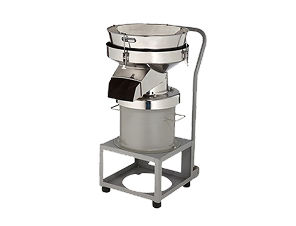
Key Benefits of Our Sieving Machine
1. Precision Separation
Designed to accurately separate materials based on size, providing consistent and reliable results.
2. Customizable Mesh Sizes
Perfect for various industries, offering flexible mesh options to handle different material types, from powders to granules.
3. High Efficiency
Equipped with an optimized vibration system that increases throughput, reducing production time and boosting productivity.
4. Built for Durability
Robust construction with high-quality materials ensures long-lasting performance and minimal downtime.
5. Versatile Industry Applications
Ideal for the food, pharmaceutical, chemical, and other industries dealing with particulate materials.
6. Seamless Integration
Easily integrates into existing production lines, ensuring smooth and hassle-free operations.
Frequently Asked Questions (FAQ) About Sieving Machine
What is a sieving machine used for?
A sieving machine is used to separate materials based on particle size, ideal for industries dealing with powders, granules, and particulate substances. It ensures the separation of finer particles from coarser ones for a wide range of applications.
How does a sieving machine work?
Sieving machines use mesh screens or vibrating sieves to filter materials according to size. The machine’s vibrating action causes particles to pass through the mesh, while larger particles are retained for further processing.
What are the typical industries that use sieving machines?
Sieving machines are widely used across various industries that handle powders, granules, or particulate materials. Common industries include:
- Food Processing: for sorting flour, spices, sugar, and other food ingredients.
- Pharmaceutical: to ensure uniform particle size of medicinal powders and tablets.
- Chemical: for separating raw materials or classifying chemical powders.
- Agriculture: for grading seeds, grains, and fertilizers.
- Mining & Minerals: to separate fine ore or minerals by size.
- Plastics & Recycling: for sorting plastic pellets or granules before reprocessing.
What are the benefits of using a sieving machine in production?
The main benefits include improved material separation, enhanced product quality, increased production efficiency, and reduced manual labor. Sieving machines ensure accurate and reliable results, optimizing your production processes.
What safety precautions should be taken when operating a sieving machine?
Always wear protective gear like gloves and goggles. Ensure the machine is stable, never overload it, and turn off the power before cleaning or maintenance. Follow the manufacturer’s instructions and keep hands away from moving parts during operation.
How do I maintain a sieving machine?
Regular cleaning, checking for wear on mesh screens, and lubricating moving parts are essential to ensure the longevity and efficiency of your sieving machine. Routine maintenance helps prevent breakdowns and downtime.
What is the difference between a sieving machine and a filtration system?
A sieving machine separates materials based on size using mesh screens, while a filtration system often uses liquid or gas filters to separate solids from liquids.
Sieving is ideal for dry materials, while filtration is suited for liquid or slurry applications.
How do I choose the right mesh size for my application?
Choose the mesh size based on the particle size you want to separate. Finer meshes are ideal for small particles, while larger meshes suit coarse materials. Consider your product type, required precision, and production speed. If unsure, consult your machine supplier for recommendations.
What factors affect the efficiency of a sieving machine?
Key factors include the mesh size, vibration speed, feed rate, material type, and machine design. Proper maintenance and correct setup also important. Optimizing these elements ensures better separation accuracy and higher throughput.